
How judges support Guyanese efforts to strengthen their justice system
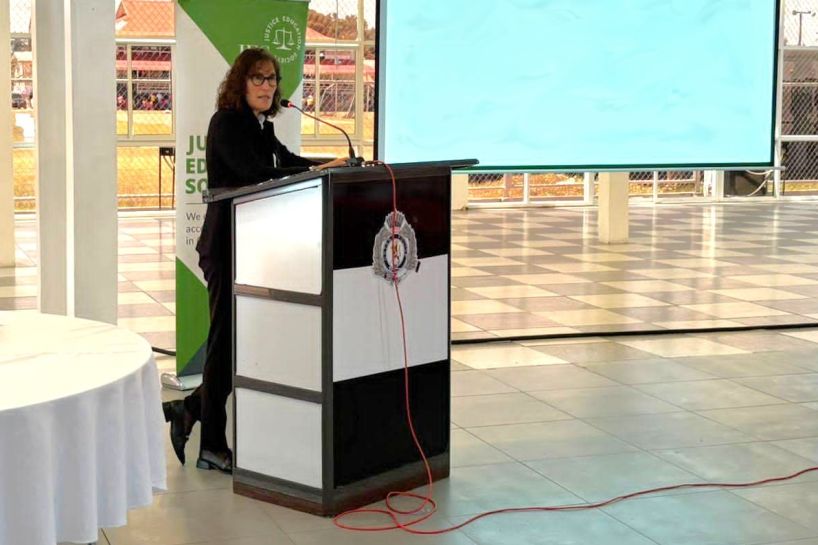
During the last decade, BC Provincial Court judges have worked with BC’s Justice Education Society (JES) to support Guyanese people in their efforts to strengthen their criminal justice system. Judges have done research, written reports, made remote presentations, and used vacation time to travel to Guyana for in-person workshops and meetings.
Current Provincial Court Chief Judge Melissa Gillespie has continued and built on work started by Judge Michael Hicks, now retired, and former Chief Judge Tom Crabtree.
In 2015 Judge Hicks accompanied JES Executive Director Rick Craig to Guyana. Located on South America’s northern tip, it’s the only English-speaking country on the continent and like Canada, it follows the British common law system. They met with criminal justice system stakeholders; visited police, prosecutors and magistrates; observed their working conditions; and identified challenges they faced. They then worked with the Guyanese and a team of BC lawyers and other experts to develop solutions.
For example, they found that the primary way for police to gather evidence in Guyana was to obtain a warned, handwritten confession from a suspect. The statements weren’t recorded and many police officers took few notes. Suspects were often illiterate and couldn’t confirm their statements. As a result, this evidence wasn’t reliable.
The JES team, including Judge Hicks, Chief Judge Gillespie (Associate Chief Judge until 2018) and BC lawyers Sandra Cunningham KC and Chris Johnson KC, identified opportunities for Guyanese police to gather other evidence using video from street cameras and witnesses’ phones. JES also helped create specialized forensic video analysis units and conducted widespread training on video evidence.
Court backlogs were also a serious problem in Guyana. Trials were not recorded as they are here. Instead judges and magistrates wrote out witnesses’ testimony and read it back to them for confirmation. Not surprisingly, this slowed trials. JES helped Guyanese courts investigate using the type of digital recording system we have in BC.
In 2016 Chief Judge Crabtree assessed delay in the Guyanese criminal justice system and made recommendations about trial management and court scheduling strategies. The BC Provincial Court then welcomed Guyanese officials for seminars and a study tour. Their visit concluded with a brainstorming session on things they’d seen that might be applied in Guyana.
Lasting until 2021, JES’ “Strengthening the Criminal Justice System” project included other initiatives aimed at improving investigation, case preparation, and trial advocacy. Chief Judge Gillespie visited Guyana five times during this project to provide ongoing education for police, lawyers and magistrates about evidence issues and streamlining processes to make more effective use of trial time with fewer interruptions.
The Provincial Court’s Digital Communications Coordinator also contributed to a communications component designed to encourage media and public support for justice system reform.
The current JES project, “Strengthening Justice for Women, Girls, and Indigenous Peoples”, began in 2022. Its goal is to deliver greater equality in access to justice for women and girls, empowering Indigenous women and reducing girls’ vulnerability to violence.
Its activities include:
- Training police in interviewing and reporting on sexual and gender-based violence, and on using a trauma-informed approach when taking initial reports
- Training police, prosecutors and judges on gender bias, stereotypes, expert testimony and use of forensic evidence
- Developing training for women and girls on accessing and navigating the justice system
JES estimates that the current project will directly benefit 12,000 women and girls living in remote, vulnerable communities, and indirectly impact all women and girls in Guyana.
Chief Judge Gillespie visited Guyana last October to lead workshops for magistrates, lawyers, and police prosecutors on “applying a trauma-informed gender and culturally sensitive approach to the application of justice”. Lisa Thompson, the JES Project Director and Country Representative in Guyana, reports that Guyana’s Acting Chancellor, Madame Roxanne George Wiltshire, also attended and called it “a masterclass”.
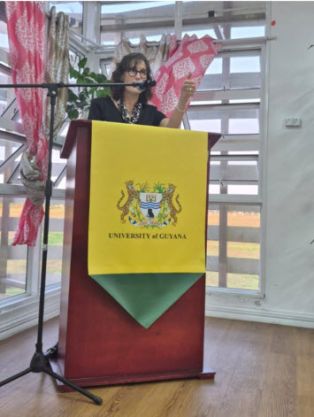
While in Guyana, the Chief Judge also spoke to students and faculty in the Institute of Gender Studies and the Faculty of Social Sciences Department of Law at the University of Guyana.
Chief Judge Gillespie says she has noticed a significant change since she began working in Guyana with JES. “Instead of just identifying issues that have always seemed insoluble, the police, prosecutors, magistrates and judges are now actively and collectively discussing these issues with a view to developing solutions. Working together, they are finding solutions.”
This page was printed from:
https://provincialcourt.bc.ca/news-notices-policies-and-practice-directions/enews/03-02-2026