
Can I go to court to watch what goes on?
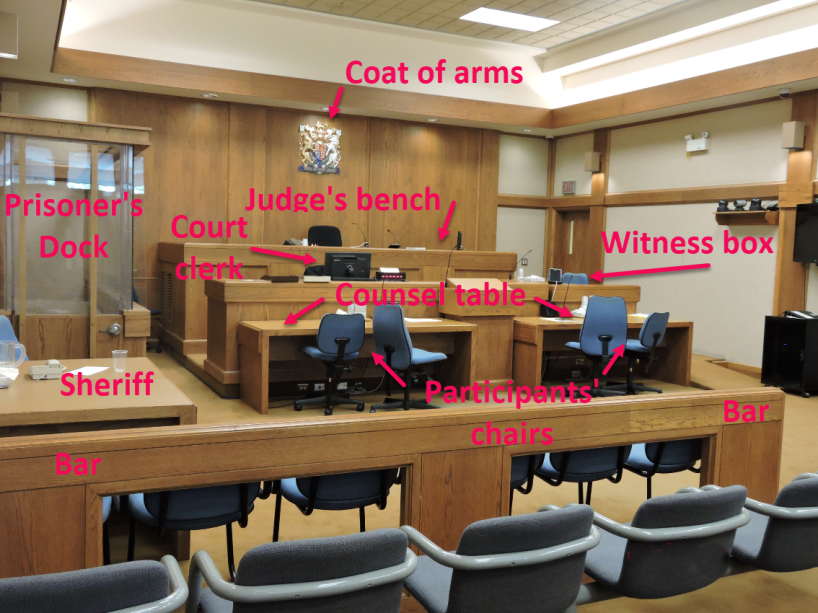
Do you binge-watch Law and Order, Suits or Rake? Real proceedings in Canadian courts aren’t quite like the ones portrayed on TV, but they can be interesting, even dramatic, and educational. Why not visit your local courthouse to see what’s going on?
Visitors welcome!
The Provincial Court welcomes people who want to watch what happens in its courtrooms. Open public access to court proceedings is an important principle in Canada. It ensures that Canadians can observe their courts in action and then comment knowledgeably on how they operate, and on the proceedings taking place there. The transparency that open access creates ensures that courts operate fairly and in accordance with the rule of law.
Trials and most other hearings in Provincial Court are open, public proceedings and you are welcome to attend court to listen and observe. However, although it occurs rarely, the law does permit a judge to order that a hearing be closed in a few special circumstances, usually to protect the privacy of children or vulnerable people.
Unlike trials, proceedings that focus on mediation and settlement, like family case conferences and small claims settlement conferences, are generally limited to the parties involved and their lawyers.
In the rare cases when a courtroom is closed to the public, there will be a sign on the door, or a sheriff will tell you. Otherwise, feel free to enter a courtroom even when court is in session, but please enter and sit down quietly to avoid disturbing the proceedings. Both the judge and the participants need to concentrate on the testimony and submissions.
Use of electronic devices restricted inside courtrooms
Before you enter a courtroom, please turn off your cell phone and other electronic devices. Their use is restricted by rules set out in the Court’s Access Policy.
“Electronic devices” include smartphones, cell phones, computers, laptops, tablets, notebooks, personal digital assistants, or any device capable of transmitting and/or recording data or audio.
Anyone may use a computer (but not a cell phone) to take notes in a courtroom.
Electronic devices can only be used for other purposes in a courtroom if you are a lawyer, an accredited journalist, or if you are given permission by the judge. Lawyers and accredited journalists may use electronic devices including cell phones to receive or transmit text from a courtroom, and accredited journalists may use them to record for note-taking purposes only. Lawyers (and prosecutors in traffic and ticket matters) may also use computers to access files and records directly related to their proceedings.
If you are conducting a trial without a lawyer and want to use online resources during your trial, ask the judge for permission.
Any use of electronic devices must be done discreetly, in a way that doesn’t interfere with the proceedings.
Taking photos and audio or video recording not permitted
For the privacy and protection of people attending court, you may not take photographs or record video or audio inside a BC Provincial courthouse without the permission of the Chief Judge. The only exception is audio-recording by accredited journalists for note-taking purposes.
Members of the media wishing to televise court proceedings in a particular case must make an application to the judge presiding in that case.
Please come to observe
These restrictions are necessary to protect the people involved in court proceedings, and we hope they won’t discourage you from visiting court. When members of the public come to watch courts in action they contribute to our democracy – observing what goes on enables you to make informed comments on the justice system and how the courts fulfil their responsibilities. Having members of the public attend provides public scrutiny and ensures that our court is accountable.
Planning your visit
To find a courthouse near you check BC Provincial Court Locations and Hours. You’ll also find information about the types of proceedings generally scheduled on specific dates or days of the week.
If you want to watch a particular case or see the cases scheduled on a particular day, you can check Daily Court Lists (Court Services Branch) for criminal and small claims cases:
To see the small claims matters scheduled to be heard there the next day select “Provincial Small Claims Court” and a location
To see scheduled criminal matters, click the link to view Criminal Court Lists. On that page you’ll find links and information including:
Adult Provincial Court criminal lists and Adult Supreme Court criminal lists showing scheduled court appearances for the current day
Adult completed court lists (Provincial) and Adult completed court lists (Supreme) showing results of court proceedings in the past five days
Advance adult court lists showing upcoming appearances in the Provincial Court for the next five days (these lists will be updated and may change)
Information on how to find a name on the lists
Explanations of the abbreviations and codes used in the lists
Provincial Court family cases are not included in Daily Court Lists.
When you get to court you may find scheduled cases have been settled or will not proceed for various reasons. Cases may also have been moved to a different courtroom. In larger courthouses there are digital signs showing the most up-to-date court lists.
Can’t make it to court?
Another way to monitor what our courts do is to read the judges’ decisions posted online. Reading the judgments that explain the judges’ reasons will provide a broader perspective on what courts do on a daily basis and may provide more detail on a reported case than you would see in a media story.
This page was printed from:
https://provincialcourt.bc.ca/news-notices-policies-and-practice-directions/enews/17-08-2026